
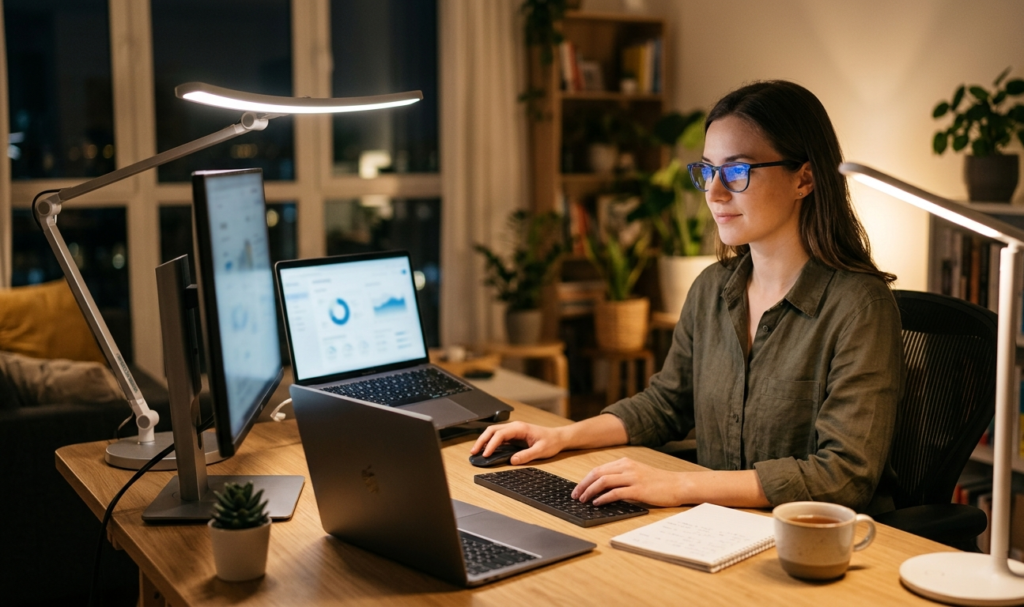
In the world of home office ergonomics, we often spend hundreds of dollars on the perfect chair or a high-end standing desk, yet we overlook the one factor that dictates how we feel at the end of every hour: the lighting. Eye strain is one of the most common workday complaints, often leading to headaches, blurred vision, and a general sense of fatigue that has nothing to do with your actual workload.
By 2026, the technology behind desk lamps has moved far beyond simple illumination. Today’s best lamps are designed with “human-centric” lighting principles—offering adjustable color temperatures that mimic natural daylight, flicker-free LEDs, and targeted beams that reduce screen glare. Proper lighting isn’t just about seeing your keyboard; it’s about creating a visual environment that supports focus and minimizes the physical stress on your eyes.
Whether you are working in a dimly lit corner of a city apartment or need to balance the harsh afternoon sun in a dedicated home office, choosing the right desk lamp is a foundational ergonomic move. This guide breaks down the best desk lamps for eye comfort in 2026 and how to position them for maximum relief.
Why Quality Lighting is an Ergonomic Essential
Ergonomics is often associated with physical posture, but “visual posture” is just as important. When your workspace is poorly lit, your eyes have to work harder to focus, causing the tiny muscles around them to fatigue. Furthermore, your brain spends extra energy trying to process information through glare or shadows.
A high-quality desk lamp helps solve several ergonomic problems:
- Reduces Contrast Sensitivity: By lighting your physical workspace, you reduce the harsh contrast between a bright monitor and a dark room.
- Eliminates “Tech Neck”: If you can’t see clearly, you will lean forward toward your screen or paperwork, ruining your spine alignment.
- Regulates Circadian Rhythm: Adjustable color temperatures help you stay alert during the morning and wind down in the evening, which is crucial for remote workers.
What to Look for in a Desk Lamp for Eye Comfort
Not all light is created equal. When shopping for a lamp in 2026, look for these specific features to ensure it actually helps your eyes rather than adding to the strain.
1. Color Temperature Adjustment
Natural light changes throughout the day. Your desk lamp should, too.
- Cool Blue/White Light (5000K+): Best for morning focus and high-concentration tasks.
- Neutral White Light (4000K): Ideal for general reading and standard workday tasks.
- Warm Yellow Light (2700K-3000K): Best for late-evening work to reduce blue light exposure before sleep.
2. Dimmability and Brightness Control
Your neighbor’s light needs are different from yours. Look for a lamp with a wide range of brightness levels so you can adjust for the time of day and the specific task at hand.
3. High Color Rendering Index (CRI)
CRI measures how accurately a light source reveals the true colors of objects. For eye comfort, look for a CRI of 90 or higher. This makes text easier to read and reduces the mental “processing power” required to see clearly.
4. Flexible Positioning
A lamp is only as good as its placement. An adjustable neck or “swing arm” allows you to direct light exactly where you need it—on your documents or your desk surface—without it bouncing directly off your monitor and causing glare.
Top Desk Lamp Recommendations for 2026
Based on our editorial research into footprint, adjustability, and light quality, these verified products are excellent choices for a modern, comfortable workspace.
- Desk Lamp — best for small spaces and minimalist setups where you need precision lighting without a bulky base.
- Desk Lamp — best for professionals who need a wide range of color temperatures and brightness levels to match their daily workflow.
- Desk Lamp — best for large desks and dual-monitor setups that require a broader throw of light to eliminate shadows.
Strategic Placement: How to Avoid Glare
Even the best lamp in the world can cause eye strain if it’s placed incorrectly. The goal is to illuminate your task (paper, keyboard, notebook) without creating “veiling glare” on your screen.
The Side-Lighting Rule
Place your desk lamp on the opposite side of your dominant hand. If you are right-handed, place the lamp on the left. This prevents your hand from casting shadows across your work when you are writing or typing.
Angle the Beam
Never have the light bulb visible to your eyes. Position the head of the lamp so the light hits the desk surface at an angle, directing any potential reflection away from your face. If you use a monitor, make sure the lamp is positioned so it doesn’t wash out the screen or create a bright “hot spot” that forces your eyes to squint.
Layer Your Lighting
Avoid working with only a desk lamp in a pitch-black room. This creates “glare by contrast.” Instead, use your desk lamp as “task lighting” in combination with “ambient lighting” (like overhead lights or floor lamps) to create a balanced, low-stress visual environment.
Small-Space Lighting Solutions
For those in city apartments or tiny home offices, every square inch of desk real estate matters. In these scenarios, consider a “clamp-on” desk lamp or a monitor light bar.
Clamp-on lamps attach to the edge of your desk, removing the need for a base entirely. Monitor light bars sit on top of your screen and cast light specifically downward onto your keyboard area, saving space while ensuring your screen remains glare-free. These are especially effective for renters who cannot install permanent overhead fixtures but need better illumination than a standard bedside lamp provides.
Common Mistakes to Avoid
- Using “Warm Only” Lighting: Warm light is cozy, but it’s often too dim for high-intensity reading. You’ll find yourself leaning in to see, which leads to back and neck pain.
- Ignoring Flicker: Cheap LEDs often have a “flicker” that isn’t always visible to the naked eye but causes significant neurological fatigue. Invest in “flicker-free” tech.
- Over-Lighting: Too much light can be as bad as too little. If your desk feels “washed out,” turn the brightness down. The light should feel like a natural extension of the room, not a spotlight.
Conclusion
Lighting is the invisible backbone of a good ergonomic setup. By choosing a desk lamp that offers adjustability in both position and color temperature, you aren’t just buying another office accessory—you are investing in your ability to stay focused and comfortable for the long haul.
Start by assessing your current light. If you find yourself squinting by 3:00 PM or leaning closer to your screen as the sun goes down, it’s time for an upgrade. A better lamp is the simplest, most effective way to brighten your workday and protect your vision in 2026.
Author Bio: Thomas Thorne is the founder of DailyErgo, where he writes about ergonomic setups, workspace comfort, small-space home offices, and practical product guidance for modern work.