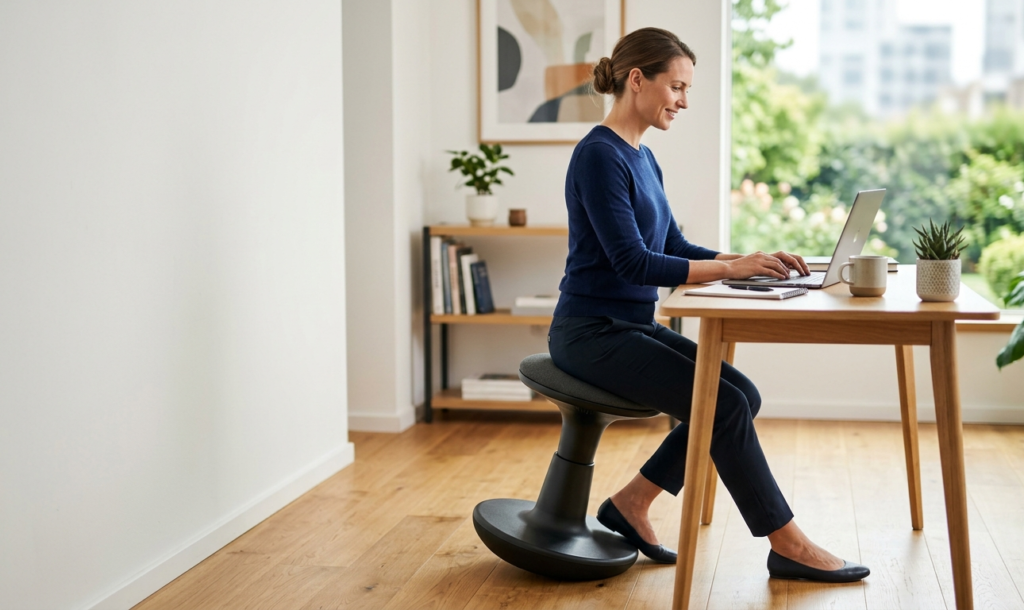
If your home office chair feels too static, an active sitting stool can be a smart change. The right one encourages small movements, keeps you from settling into one stiff position for hours, and takes up less room than a bulky task chair.
That said, not every active stool works the same way. Some are best for short focus blocks at a laptop desk. Others are better as a companion to a sit-stand setup. The best active sitting stools for home offices are the ones that match how you actually work: how long you sit, how often you stand, and how much floor space you have to spare.
Why active sitting stools work well in home offices
A traditional office chair is built for long seated stretches. An active stool is built for movement. That difference matters in smaller home offices, bedroom workstations, and multipurpose rooms where you may not want a large rolling chair parked out all day.
Most active stools encourage subtle shifting through a curved, weighted, or flexible base. That motion can help break up the “freeze” posture many people fall into during computer work. In practice, they tend to work especially well for:
- people who already use a sit-stand desk
- remote workers who like to switch positions often
- small home offices where a compact seat is easier to manage
- anyone who wants a lighter, easier-to-move alternative to a full chair
The tradeoff is simple: an active stool usually offers less full-body support than a conventional ergonomic chair. For many people, that makes it a great part-time seat, not necessarily an all-day replacement.
What to look for before you buy
Before you pick a stool, think less about marketing language and more about how it will fit into your room and routine.
Height range
This is the first filter. If the stool won’t work with your desk height, nothing else matters. Standard sitting desks and sit-stand desks need very different adjustment ranges, so check compatibility before you buy.
Base movement
Some stools wobble gently. Others let you perch in a more upright, centered position with smaller shifts. If you’re new to active sitting, a moderate amount of movement is usually easier to live with than an aggressively unstable base.
Seat comfort
A firmer seat can encourage better posture, but it can also wear on you during longer sessions. If you take lots of calls or spend hours in back-to-back meetings, a slightly more forgiving seat tends to feel more practical.
Footprint and portability
One of the biggest advantages of an active stool is size. In a small apartment or shared office, look for a model that tucks under the desk easily and can be moved with one hand.
Realistic use time
An active stool is not automatically better just because it’s “active.” If you do deep work for six straight hours, you may still want a supportive ergonomic chair nearby. The best setup for many home offices is a stool plus a regular chair, not one or the other.
Best active sitting stools for home offices
Vari Active Seat
For most home office shoppers, the Vari Active Seat is one of the easiest places to start. It has a simple learning curve, a compact footprint, and a movement style that feels approachable rather than distracting. If you want a stool that helps you shift and stay a little more engaged without feeling like exercise equipment, this is the kind of design that makes sense.
It’s especially well suited to people who alternate between sitting and standing during the day. The main limitation is that it still feels like a perch more than a lounge seat. If you prefer deep cushioning or lean heavily on back support, it may not replace your main chair.
Aeris Muvman
The Aeris Muvman is a premium pick for people who want an active stool that feels more refined and more purpose-built for long workdays. It’s often a strong fit for sit-stand desk users because it supports that in-between posture: not fully standing, not fully sitting.
Where it stands out is usability over time. It tends to appeal to professionals who want movement without a casual or gimmicky feel in the workspace. The downside is price. It’s harder to justify if you only plan to use an active stool for short stretches or as an occasional backup seat.
QOR360 Ariel
If posture is your main concern, the QOR360 Ariel is worth a look. This style focuses less on wide wobbling and more on helping you sit upright with subtle balance and pelvic positioning. For some users, that feels more natural and more sustainable than a stool that moves in every direction.
It’s a strong option for focused desk work, writing, or computer tasks where you want alert posture without a lot of fidgeting. The limitation is comfort preference. Some people love the firmer, more intentional sitting experience; others find it too different from a regular chair to use for long stretches right away.
Uncaged Ergonomics Wobble Stool Air
If budget matters, the Uncaged Ergonomics Wobble Stool Air is one of the better-known value-oriented options in this category. It gives you the active-stool experience without pushing into premium pricing, which makes it appealing for first-time buyers who are curious but not ready to spend heavily.
This kind of stool is often best for shorter sessions, flexible work areas, or shared home setups where a lightweight seat is useful. The tradeoff is that lower-cost active stools can feel less polished in movement and finish than higher-end models. That may be perfectly fine for a practical home office, but it’s worth knowing up front.
Learniture Adjustable-Height Active Learning Stool
Originally popular in classrooms and training environments, the Learniture-style active stool also makes sense in compact home offices. It’s a good fit for households that prioritize durability, easy cleanup, and straightforward function over design details.
This is a smart choice if your desk area doubles as homework space, a craft area, or a shared workstation. Its limitation is aesthetic. It can look more utilitarian than other options, so it may not be the first pick if your office is in a visible living area and you care a lot about decor.
Which type is best for your setup?
If you’re deciding between styles, this quick guide helps narrow it down.
Best for a sit-stand desk
Look at perch-style stools like the Aeris Muvman or a height-flexible active seat like Vari. These work best when you switch between standing, leaning, and sitting throughout the day.
Best for small apartments
Compact stools with a narrow footprint are usually the easiest win. They slide under the desk, don’t dominate the room, and are easier to stash when your office shares space with a bedroom or living room.
Best for posture-focused users
A more centered, upright design like the QOR360 Ariel may feel better than a loose wobble stool if your goal is controlled alignment rather than constant motion.
Best for budget-conscious shoppers
A simpler wobble stool often gets you most of the practical benefit: less static sitting, more movement, and a smaller footprint than a full chair.
Common mistakes people make with active stools
One of the biggest mistakes is treating an active stool like a full ergonomic chair from day one. Most people do better when they ease in and use it for shorter blocks at first.
A few other pitfalls are common:
- buying based on looks instead of desk height
- choosing too much instability for focused computer work
- expecting one stool to solve every comfort problem
- using it for hours without changing position
- skipping a foot placement check, which affects comfort fast
The best active sitting stools help you move more. They do not eliminate the need to stand up, stretch, and switch postures during the day.
How to make an active stool more comfortable
Set it up so your elbows still meet the desk comfortably and your feet feel planted or supported. If the height is off, even a good stool will feel awkward.
It also helps to use an active stool in rotation. Many home office setups work better with a simple pattern:
- active stool for short focus sessions
- standing for calls or quick tasks
- ergonomic chair for longer seated work
That mix tends to feel more realistic than trying to perch from morning to evening.
Conclusion
The best active sitting stools for home offices are the ones that support movement without creating new discomfort. For most people, that means choosing a stool with a manageable learning curve, a footprint that fits the room, and a height range that actually matches the desk.
If you want an easy all-around option, start with a versatile model like the Vari Active Seat. If you use a sit-stand desk heavily, a premium perch like the Aeris Muvman may be worth it. And if you’re simply trying to sit less rigidly in a small space, a well-made wobble stool can be a practical upgrade. The key is to treat active sitting as one tool in a healthier home office setup, not the whole answer.