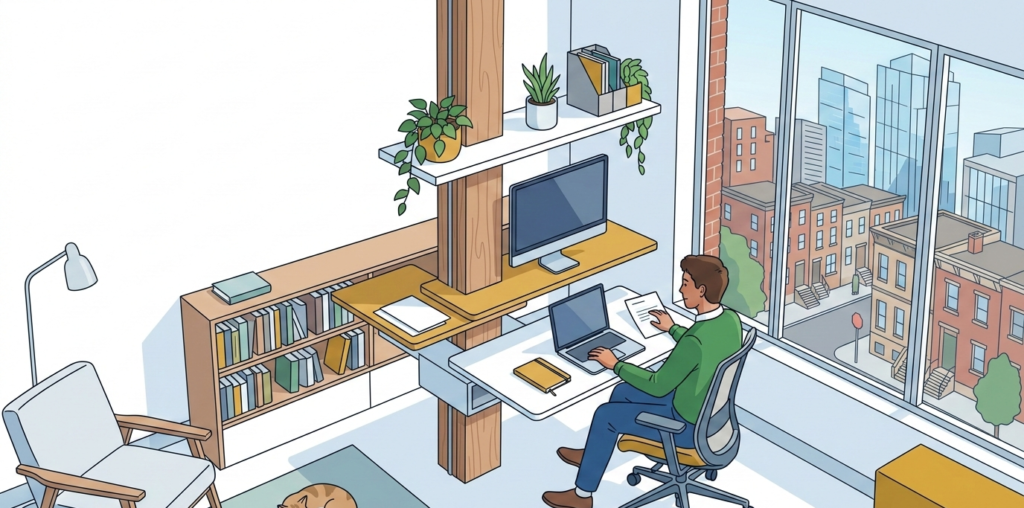
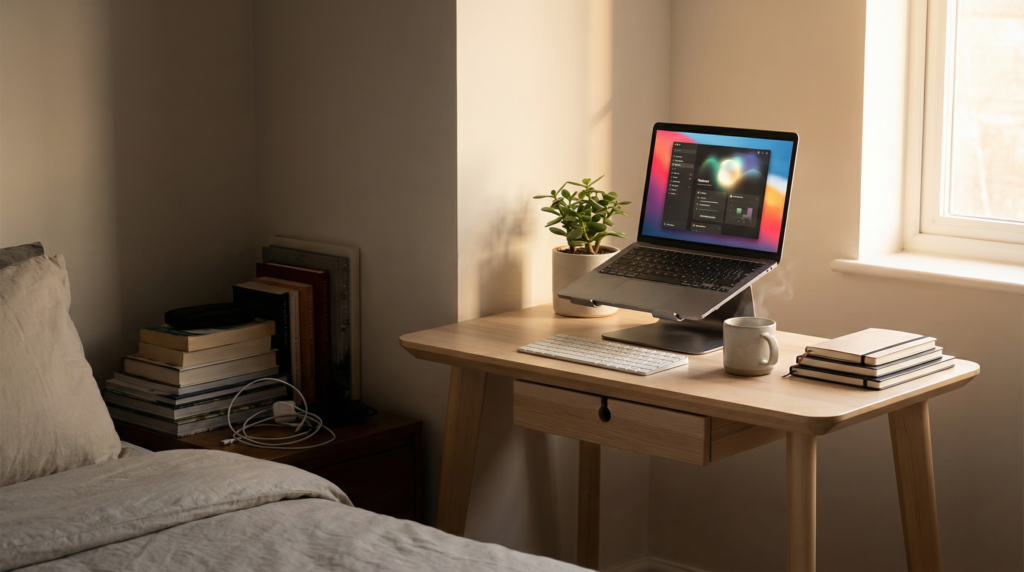
A small bedroom desk setup can quietly make your workday harder than it needs to be. When your desk is squeezed between a bed, dresser, and laundry basket, even simple tasks can feel more draining. You may not need a bigger room—you may just need a better plan.
The good news is that a more comfortable, productive setup usually comes down to layout, scale, and a few smart adjustments. Whether you work from home full-time, take online classes, or just need a dependable spot to handle daily tasks, a small bedroom can absolutely support better workdays.
Start With What the Room Can Actually Support
Before buying anything or rearranging furniture at random, look at the real limits of the room. Small bedrooms work better when every piece has a reason to be there.
Measure the work zone, not just the desk wall
A desk may technically fit on a 42-inch wall, but that does not mean the setup will work well. You also need room for:
- chair movement
- leg space
- walking clearance
- nearby drawers or closet doors
- the visual breathing room that keeps the corner from feeling cramped
As a general rule, try to keep at least 24 to 30 inches of clearance behind your chair if possible. In a very tight room, even 20 to 24 inches can work if the chair tucks in easily and you are not blocking a major path.
Think in zones
In a small bedroom, the desk area should feel like a separate function, even if it shares space with sleeping and storage. That means defining a work zone with intention:
- desk for focused tasks
- bed for rest
- dresser or closet area for storage
- one small landing spot for daily items like keys, chargers, or notebooks
When everything overlaps, the room feels busier and your brain has a harder time switching into work mode.
Choose the Best Desk Position, Not Just the Empty Corner
A desk setup works best when it fits the flow of the room. The wrong placement can make the entire bedroom feel tighter.
Prioritize natural light without creating screen glare
If your bedroom has one window, placing the desk near it can improve mood and reduce daytime eye strain. But avoid putting your monitor directly in front of or directly against a bright window if glare becomes a problem.
A practical setup usually looks like this:
- desk placed perpendicular to the window
- window light hitting the side of your workspace
- adjustable blinds or curtains to soften harsh afternoon sun
That gives you daylight without turning your screen into a mirror.
Avoid blocking the room’s main pathway
In many US apartments and smaller homes, bedroom layouts are narrow rather than square. If your desk blocks the path from the door to the bed or closet, the room will feel irritating every single day.
A better option is often:
- along the shortest usable wall
- beside the bed if the desk depth is modest
- at the foot of the bed only if you still have enough walking space
- in an underused nook rather than centered on the biggest wall
In a room under about 120 square feet, oversized furniture usually creates more stress than comfort.
Make Ergonomics Work in a Small Footprint
A cramped setup often leads people to accept bad posture as “just part of small-space living.” It does not have to.
Set the right desk and chair relationship
Your elbows should rest at about a 90-degree angle when typing, with shoulders relaxed rather than lifted. If the desk is too high and you cannot replace it, raise your chair slightly and use a footrest or even a firm box to support your feet.
A few basics matter more than fancy gear:
- feet flat and supported
- knees roughly level with or slightly below hips
- wrists neutral, not bent upward
- screen top near or slightly below eye level
These changes reduce tension fast, especially if you spend 4 to 8 hours at the desk.
Use vertical solutions instead of wider furniture
In a small bedroom, width is precious. If your desk surface is constantly crowded, do not automatically shop for a larger desk. First ask whether the problem is actually poor vertical use.
Helpful upgrades include:
- a monitor riser with space underneath
- a slim shelf above the desk
- wall hooks for headphones or bags
- a pegboard for supplies
- a narrow rolling cart that fits beside the desk
This keeps essentials close without eating up more floor space.
Build a Setup That Matches How You Work
A better workday setup is not just about neatness. It should support your actual routine.
For laptop users: protect the neck and free the surface
If you work mainly on a laptop, the built-in screen usually sits too low. Over time, that encourages a forward head position and upper-back fatigue.
A better small-bedroom setup includes:
- raising the laptop to eye level
- using an external keyboard and mouse
- keeping only daily-use items on the desk
This arrangement also makes a shallow desk feel more functional because the screen no longer dominates the whole surface.
For dual-use bedrooms: make it easy to “close work”
If your bedroom is also your office, the setup should not stay visually “on” all night. That is one of the biggest reasons people feel mentally stuck after work.
Try a simple shutdown routine:
- put notebooks into one file holder or drawer
- switch off the task light
- tuck the chair in fully
- place the laptop in a stand or sleeve
- clear cups, cords, and loose paper before dinner
That five-minute reset can make the room feel like a bedroom again.
Improve Lighting So the Space Feels Better, Not Harsher
Lighting changes how small rooms feel. It also affects fatigue more than many people realize.
Layer the light instead of relying on one overhead bulb
A single bright ceiling light often makes a bedroom desk corner feel flat and uncomfortable. A better approach is layered lighting:
- natural daylight during working hours
- one focused desk lamp for tasks
- softer ambient bedroom lighting for evenings
This matters in winter too, especially in colder parts of the US where short daylight hours can make bedroom work setups feel gloomy by late afternoon.
Choose warmer light for the room, neutral light for work
For work tasks, neutral white light often helps with visibility and focus. For the rest of the bedroom, warmer lighting usually feels more relaxing. Keeping those two functions separate helps the room serve both purposes.
Reduce Visual Clutter to Make the Room Feel Bigger
Small bedrooms rarely fail because they are too small. More often, they fail because too many things compete for attention.
Keep the desktop limited to daily essentials
A good rule is to leave only what you use at least four days a week. That might mean:
- laptop or monitor
- keyboard and mouse
- lamp
- water bottle or mug
- one notebook
- one small tray for essentials
Everything else should go in a drawer, wall organizer, or nearby bin.
Manage cords before they become the room’s biggest eyesore
A tangle of charging cables can make even a decent setup feel unfinished. In a small room, that visual mess spreads fast.
Use simple cable control methods:
- clip cords to the desk edge
- route power strips behind furniture
- use short cables where possible
- label chargers if several devices share the space
Cleaner cables make the setup look calmer and make cleaning easier too.
Common Small Bedroom Desk Mistakes to Avoid
Buying a desk that is too deep
Depth matters more than many shoppers expect. In a small bedroom, a desk around 18 to 24 inches deep can be easier to live with than a bulky 30-inch model. If the desk sticks too far into the room, it affects everything around it.
Using bedroom furniture as overflow office storage
Once the nightstand becomes printer storage and the dresser top becomes paper storage, the room starts losing its balance. Keep work supplies contained near the desk whenever possible.
Ignoring movement
Even in a small space, you need enough room to shift positions, stand up easily, and reach what you need without twisting awkwardly. Comfort is not only about posture—it is also about movement flow.
A Simple Upgrade Plan for This Weekend
If your current setup feels frustrating, start with these steps:
Step 1: Clear the surface completely
Remove everything and add back only the essentials.
Step 2: Recheck placement
See whether rotating the desk or moving it 6 to 12 inches changes the room flow.
Step 3: Fix screen height
Raise the laptop or monitor so your neck is not constantly angled downward.
Step 4: Add one vertical storage solution
A shelf, riser, pegboard, or slim cart can free up more space than a larger desk.
Step 5: Improve lighting
Use daylight when possible and add a task lamp for focused work.
Step 6: Create an end-of-day reset
Make it easy to shift the room back into rest mode every evening.
Conclusion
A better small bedroom desk setup is not about cramming in more furniture or chasing a picture-perfect workspace. It is about making the room support real life: better posture, easier movement, less visual stress, and a work area that does not take over the whole bedroom.
When the layout makes sense and the setup matches your daily routine, even a modest corner can feel more comfortable and more productive. In a small space, thoughtful choices matter more than square footage.