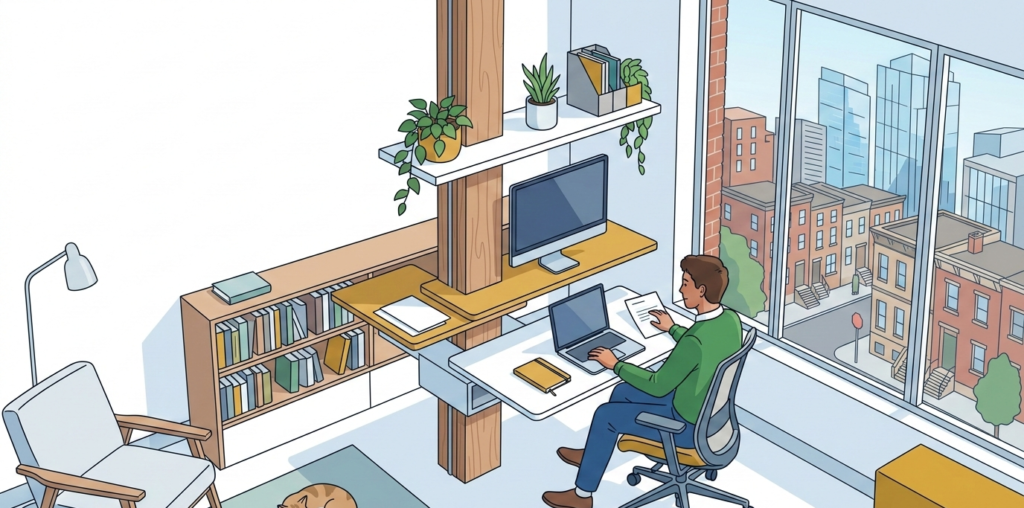
Finding the right office chair is a challenge under normal circumstances, but when you are working with a tight floor plan in a city apartment or a multi-use studio, the stakes are higher. You cannot simply wheel in a massive, executive-style throne and expect your living room to remain functional. In a small space, every inch of footprint counts, and the visual weight of your furniture can make the difference between a home that feels like a sanctuary and one that feels like a cramped cubicle.
The good news is that “ergonomic” no longer implies “oversized.” Modern design has shifted toward sleeker profiles and smarter materials that provide full-body support without the bulk of traditional office furniture. For US apartment dwellers—from those in tiny New York studios to professionals in compact Chicago condos—the goal is to find a chair that offers adjustable lumbar support, breathable mesh, and high-quality casters, all while fitting neatly under a shallow desk when not in use.
In this guide, we break down the logic of selecting a chair for a limited area. We will look at why footprint matters just as much as seat depth, and we’ll highlight specific models that strike the perfect balance between professional-grade comfort and small-space practicality.
The “Small Footprint” Philosophy
When shopping for an ergonomic chair for an apartment, the first measurement to check isn’t the height; it’s the width of the base. Most standard office chairs have a five-star base that averages 26 to 28 inches in diameter. In a tight corner, those extra two inches can prevent you from tucking the chair completely under your desk, essentially turning your workspace into a permanent obstacle in the middle of your room.
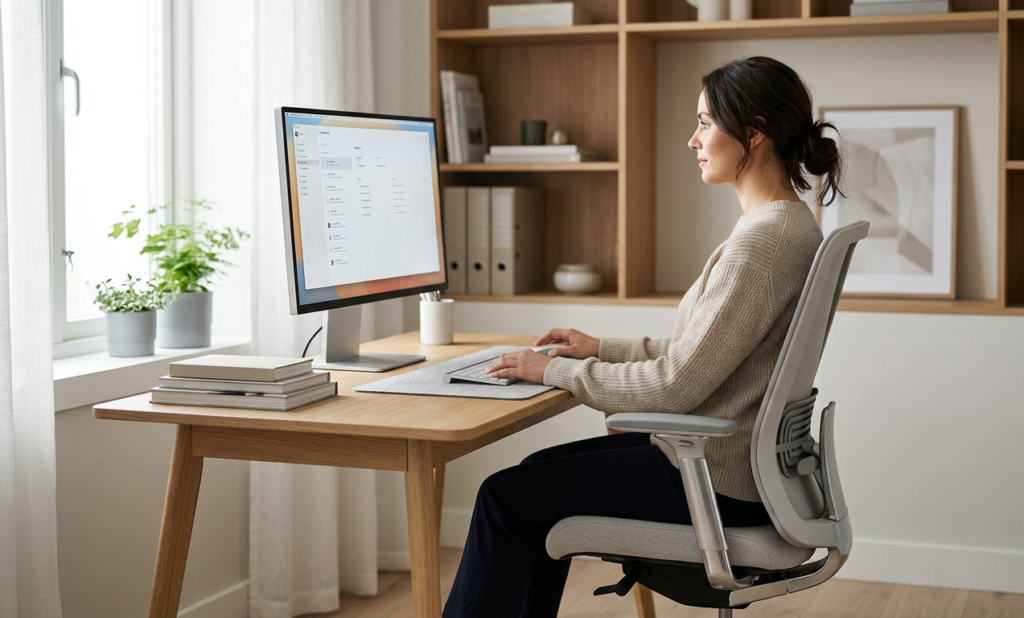
For those in small apartments, look for “compact” or “mid-back” designs. While high-back chairs with integrated headrests offer great support for tall individuals, they often dominate a room visually. A mid-back chair provides essential support for the lumbar and thoracic spine but sits below the sightline of most monitors and windows, keeping your apartment feeling open and airy.
Versatility and “Tuckability”
In a multi-use space, your work chair often pulls double duty. It might be your desk chair from 9 to 5 and your extra seat for guests in the evening. This is where aesthetics and mobility come into play. A chair with flip-up arms is a game-changer for small apartments; it allows the chair to slide under desks that have lower clearance or drawer units, saving several square feet of walkway space when you are off the clock.
Mobility is another critical factor. Many US apartments feature hardwood floors or low-pile rugs. You want casters that move smoothly without excessive noise or damage. If your chair stays in your bedroom or living room, look for neutral color palettes—grays, whites, or blacks—that blend into your decor rather than screaming “corporate office.”
Balancing Support with Size
The most common mistake when trying to save space is opting for a “task chair” without ergonomic features. A basic plastic or wooden chair might look sleek, but it won’t support your spine during an eight-hour shift. To work comfortably, you still need three non-negotiables: adjustable seat height, some form of lumbar tension or support, and a breathable backrest.
Mesh is particularly effective for small apartments. Beyond being cool and comfortable, mesh backrests are translucent. This “see-through” quality reduces the visual clutter in a room, making a small office setup appear much less intrusive than a solid leather or fabric chair would.
Recommended Products
- SIHOO M57 Ergonomic Office Chair — Best for full-day support in a compact footprint; the three-way adjustable armrests and dedicated lumbar support provide “pro-level” ergonomics without the massive size of an executive chair. View on Amazon
- Great Trust Ergonomic Office Chair — Best for ultra-tight spaces and budget-conscious renters; its streamlined design and flip-up armrests make it incredibly easy to tuck away under small desks when the workday ends. View on Amazon
Conclusion
You don’t have to choose between your floor space and your back health. By prioritizing chairs with smaller base diameters, breathable mesh, and tuckable armrests, you can maintain a high-functioning home office even in the most modest square footage. The best ergonomic chair for a small apartment is the one that supports you silently during the day and disappears gracefully into the background at night. Focus on the measurements, prioritize the essential support features, and you’ll find that a small home can still be a very comfortable place to work.